Fraud Blocker Madagascar Safari Travel

Adventure Through the World’s Largest Island of Endemic Wonders

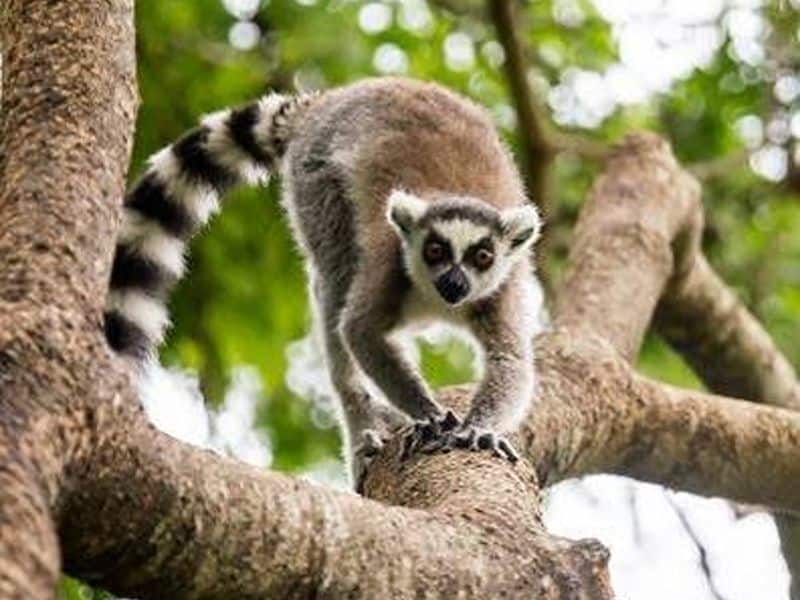
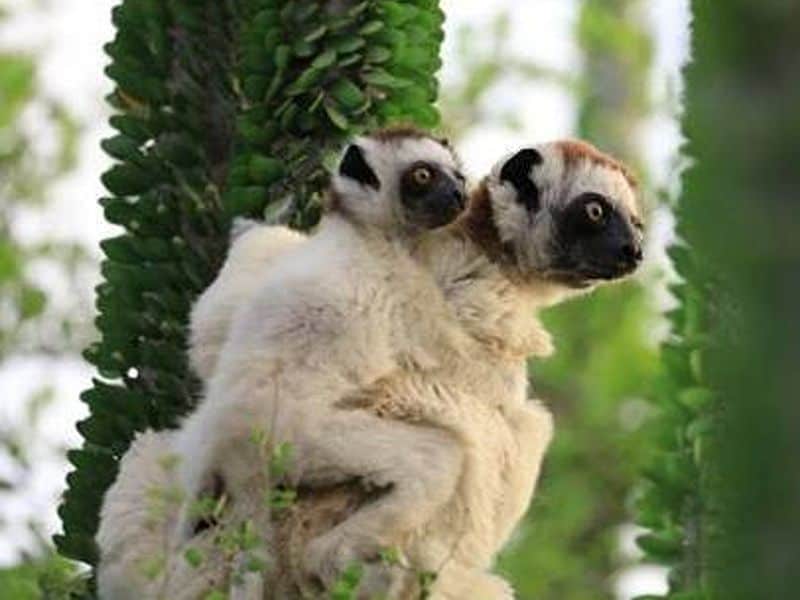
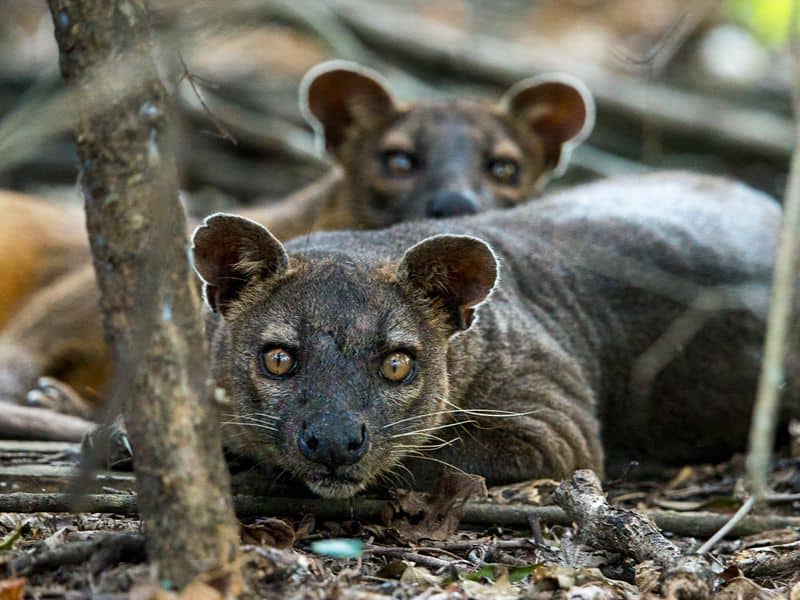
Madagascar is a large island nation off Africa’s southeast coast, renowned worldwide for its extraordinary biodiversity and endemic wildlife. Covering an area similar to France, Madagascar’s diverse landscapes include tropical rainforests, dry spiny forests, unique limestone formations, and pristine beaches. Over 90% of Madagascar’s animal species are endemic, including famous lemurs, rare chameleons, the elusive fossa, and diverse bird and amphibian species found nowhere else on Earth.

As one of the world’s top ecotourism destinations, Madagascar offers unparalleled wildlife viewing opportunities in national parks like Andasibe-Mantadia, Isalo, and Masoala. Visitors can explore Madagascar’s unique ecosystems, spotting dozens of lemur species, colorful reptiles, and vibrant marine life along the island’s coral reefs. Madagascar’s rich culture and traditions also enhance its appeal as a travel destination.

The best time to visit Madagascar is during the dry season, from May to October, when hiking trails are accessible, and wildlife is most active. Madagascar adventure travel includes wildlife safaris, hiking, snorkeling, and cultural experiences, making it a must-visit island for nature lovers.

Madagascar Sample Safaris

Madagascar 5-day Adventure: Lemurs of Andasibe

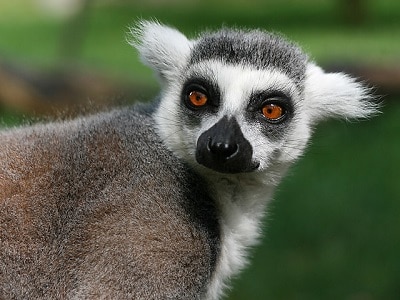
-A taste of Madagascar for those on a budget or tight timeline - this extension can be added to many other safaris -Visits two areas within Andasibe, a stunning rainforest park famous for its lemur population -A naturalist’s goldmine with many seldom-seen species of mammals, reptiles and birds, plus epic flora (over 1,000 species of orchids) -Hands-on conservation with reforestation NGO Mitsinjo - plant an indigenous species -Help with logistics in a challenging location (English-speaking guide, private road transfers and activities)
Madagascar Adventure

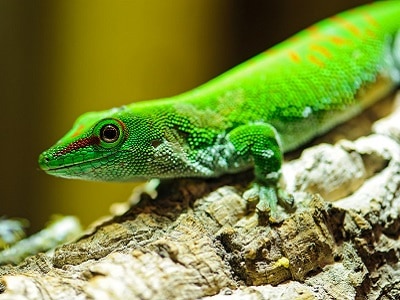
-One of the top wild, rugged and off the beaten path experiences in Africa -Combine two of Mada’s most precious regions - prehistoric forest and stunning coastline -Incredibly unique wildlife and birds including several species of lemur, sifaka, crested coua, Madagascar fish eagle, chameleon, whales during migration season, or even the rare, elusive fossa -Amazing local Malagasy and Antandroy culture - sacred ancestral burial tombs, tribal village visit -Help with logistics in a challenging location (English-speaking guide, charter flights)

Madagascar Regions

Antananarivo

Overview

Often simply called “Tana,” Antananarivo is Madagascar’s vibrant capital and cultural heart. Built across a series of steep hills, the city mixes French colonial heritage, traditional Malagasy architecture, and the bustle of modern urban life. It’s the first and last stop for many travelers to Madagascar, offering a deep dive into the country’s history, markets, cuisine, and local rhythm. Tana provides a dynamic contrast to Madagascar’s remote parks and beaches—offering insight into how people live, work, and celebrate across the island.

Location

Located in the central highlands of Madagascar, Antananarivo sits about 1,280 meters (4,200 feet) above sea level. It’s inland, far from the coasts, and well-connected by road and air to the rest of the country.

Wildlife

While Antananarivo itself isn’t a wildlife hotspot, the surrounding area offers the chance to spot some of Madagascar’s unique biodiversity. The Tsarasaotra Bird Sanctuary, a protected wetland within the city, provides refuge for rare waterbirds, including the endangered Madagascar pond heron and Meller’s duck.

Best Times to Go

The best time to visit Antananarivo is from April to October, during the dry season. Skies are clearer, temperatures are mild, and travel is easier. June through August is cooler due to the city’s elevation, making it pleasant for city touring and cultural exploration. The rainy season, from November to March, can bring heavy downpours and traffic slowdowns, but it’s also when the surrounding landscapes are lush and green.

Andasibe (Perinet Special Reserve and Andasibe-Mantadia National Park)

Overview

Andasibe is known for its lush, endemic rainforest and is home to two key protected areas: the Perinet Special Reserve and Andasibe-Mantadia National Park. The drive to the area offers a glimpse into rural Malagasy life, passing rice fields, red-brick houses, and roadside markets.
Andasibe-Mantadia National Park spans 15,500 hectares of pristine rainforest and shelters many of Madagascar’s endemic species, including several types of lemurs. The park has a wilder, less-developed feel than Perinet, and its trails can be more challenging. Along the way, you may encounter a variety of mammals, reptiles, and birds.
The smaller Perinet Special Reserve, covering 810 hectares, is the best place to spot the Indri—the largest lemur in Madagascar and one that cannot survive in captivity. While searching for the Indri, keep an eye out for the many species of orchids that thrive in the forest.

Location

Eastern Madagascar, three hour drive east of Antananarivo; accessible by paved road through rural villages and rice fields.

Wildlife

Andasibe is one of Madagascar’s top wildlife destinations, known for its rich biodiversity and easy wildlife viewing. Its rainforests are home to iconic species like the Indri—the island’s largest lemur—as well as chameleons, rare birds, and a wide variety of reptiles and amphibians.

Best Times to Go

Andasibe is great year-round, but September to November offers drier weather and a chance to see baby lemurs in October.

Montagne d'Ambre National Park

Overview

This volcanic massif is a biodiversity hotspot, home to 75 bird species, 25 mammals, and 59 reptiles across 18,200 hectares of montane rainforest. Visitors can explore lush landscapes filled with lemurs, giant ferns, and strangler figs, as well as stunning waterfalls like Cascade Sacré, Cascade d’Antankarana, and Cascade d’Antomboka. The cooler climate and thriving ecotourism industry, rooted in community-based management, make it a unique and enriching destination.

Location

Located in northern Madagascar, about a 40-minute drive south of Diego Suarez (Antsiranana); accessible by paved road through montane forest and scenic highland landscapes.

Wildlife

Montagne d’Ambre National Park is a biodiversity hotspot, home to a remarkable variety of endemic wildlife. It shelters species found nowhere else, such as the Amber Mountain rock thrush, known only from this massif, and the tiny Amber Mountain leaf chameleon, one of the smallest reptiles in the world. The park also boasts thirty-five species of frog, along with a rich diversity of lemurs, birds, reptiles, and amphibians.

  • Sanford’s Lemur
  • Crowned Lemur
  • Ring-Tailed Mongoose
  • Fossa
  • Amber Mountain rock thrush
  • Crested Ibis
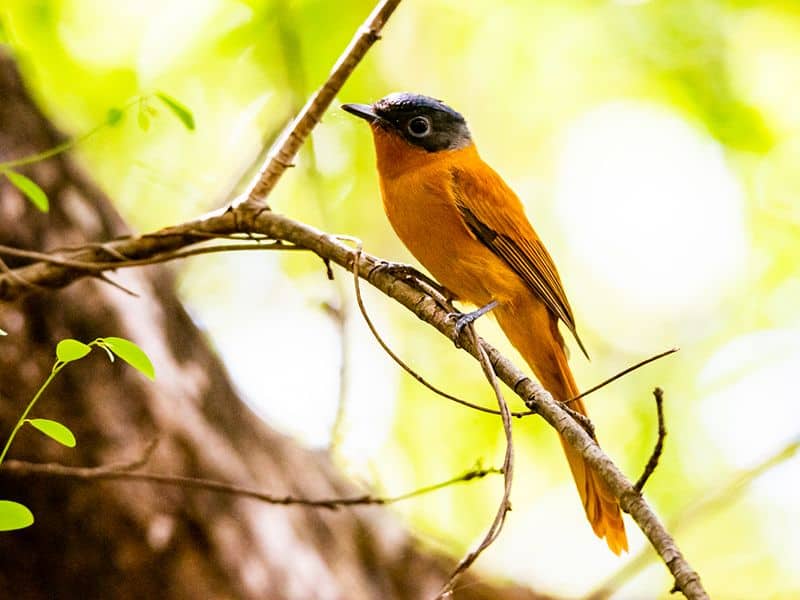
  • Paradise Flycatcher
  • Forest Rock Thrush
  • Ground-Rollers
  • Amber Mountain leaf chameleon

Best Times to Go

The best time to visit Montagne d’Ambre National Park is during the dry season, from May to October, when trails are easier to navigate and wildlife is more active. Avoid the rainy season from January to March, as heavy rains can make access difficult.

Ankarana Special Reserve

Overview

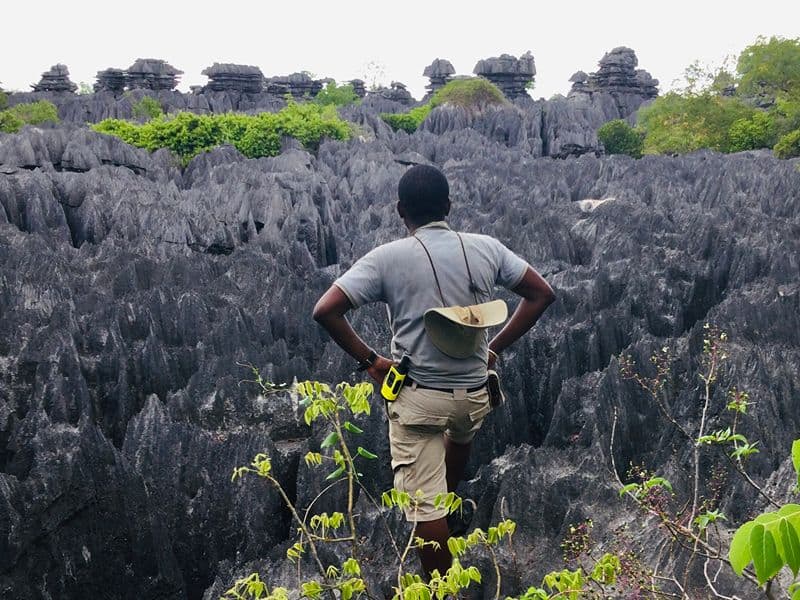
This limestone Tsingy region, with “tsingy” meaning “where one cannot walk barefoot” in Malagasy, is filled with geological wonders shaped by acidic rain, including towering spires, sheer cliffs, deep canyons, and giant caves. Ankarana Special Reserve, a UNESCO World Heritage Site, features a 100 km network of underground rivers, including the Andrafiabe and Crocodile Caves, which are home to the world’s only cave-dwelling crocodiles.

Location

Located in northern Madagascar and can be accessed by plane from Tana.

Wildlife

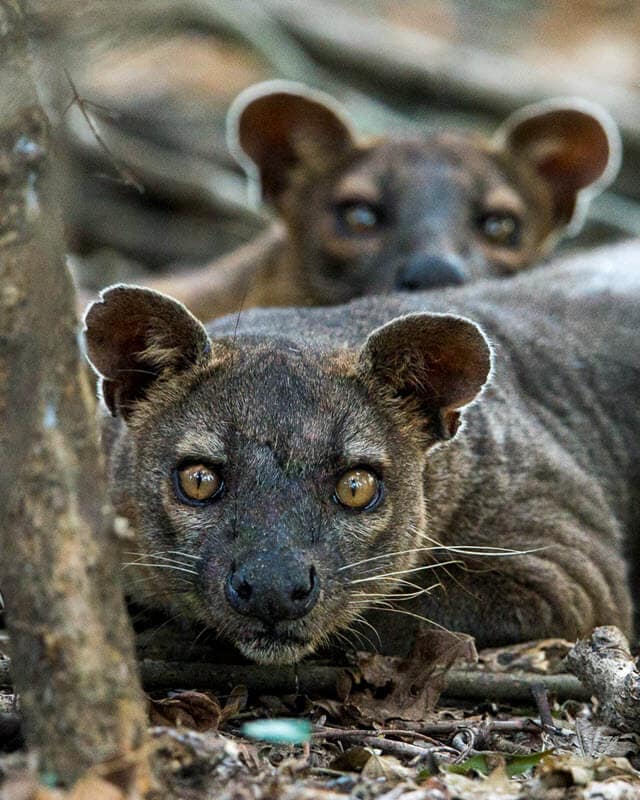
Ankarana Special Reserve is a unique wildlife area known for its dramatic limestone formations and rich biodiversity. While the giant lemurs that once roamed Madagascar are now extinct, and their fossils have been found here, the reserve is home to important lemur species like the Crowned Lemur, Sanford’s Brown Lemur, and the rare Ankarana Sportive Lemur. The park also supports a diverse range of birds, reptiles, and mammals, including the elusive Fossa and Tenrec.

  • Crowned Lemur
  • Sanford’s Brown Lemur
  • Ankarana Sportive Lemur
  • Fossa
  • Tenrec
  • Cave-dwelling Crocodile
  • Madagascar Cave Boa
  • Crested Ibis
  • Madagascar Fish Eagle
  • Numerous Frog Species

Best Times to Go

The best time to visit Ankarana Special Reserve is during the dry season, from May to October, when the weather is cooler and trails are easier to explore. Avoid the rainy season between January and March, as heavy rains can make access difficult.

Masoala National Park

Overview

Masoala, meaning “eyes of the forest,” is named for the watchful eyes of the aye-ayes found in the area. The park protects 2,300 square kilometers of rainforest and 100 square kilometers of marine parks along the peninsula. With marshes, mangroves, tropical rainforests, and coastal ecosystems, it offers a chance to experience the full range of Madagascar’s unique biodiversity.

Location

Located in the north on the Masoala peninsula and can be accessed by plane from Tana.

Wildlife

Masoala National Park is a diverse wilderness where you can find many of Madagascar’s unique animals, including several lemur species, colorful reptiles, a variety of birds, and rich marine life like whales and dolphins.

  • Red ruffed lemur
  • Aye-aye
  • Panther chameleon
  • Madagascar day gecko
  • Giraffe weevil
  • Helmet vanga
  • Humpback whale
  • Indo-Pacific bottlenose dolphin

Best Times to Go

The best time to visit Masoala National Park is from June to November, during the dry season and includes humpback whale migrations along the coast. October and November are especially good for birdwatching and spotting young lemurs.

Anjajavy Forest

Overview

Anjajavy Forest is a remote and ecologically rich reserve where dry deciduous forest meets beaches and coral reefs. This private protected area offers a unique blend of terrestrial and marine ecosystems, supporting a high concentration of endemic wildlife.

Location

Anjajavy is located in a remote region of northwestern Madagascar, accessible only by private charter flight from Antananarivo. It sits along the Mozambique Channel, surrounded by forest, mangroves, and secluded coves.

Wildlife

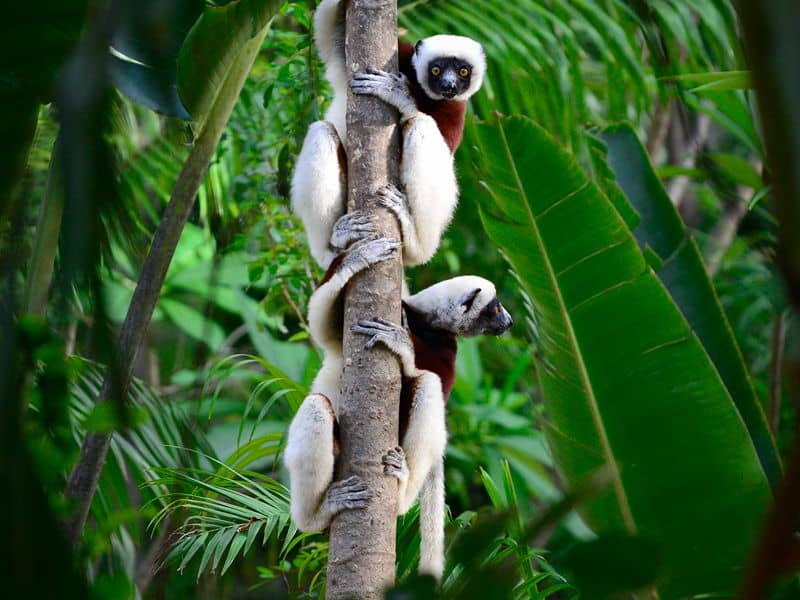
The forest is home to a wide range of species, including Coquerel’s sifakas, mouse lemurs, bush-pigs, and the elusive fossa. You’ll also find chameleons, and over 130 bird species, many of which are endemic. Along the coast, dolphins, sea turtles, and vibrant coral reefs add to the rich biodiversity.

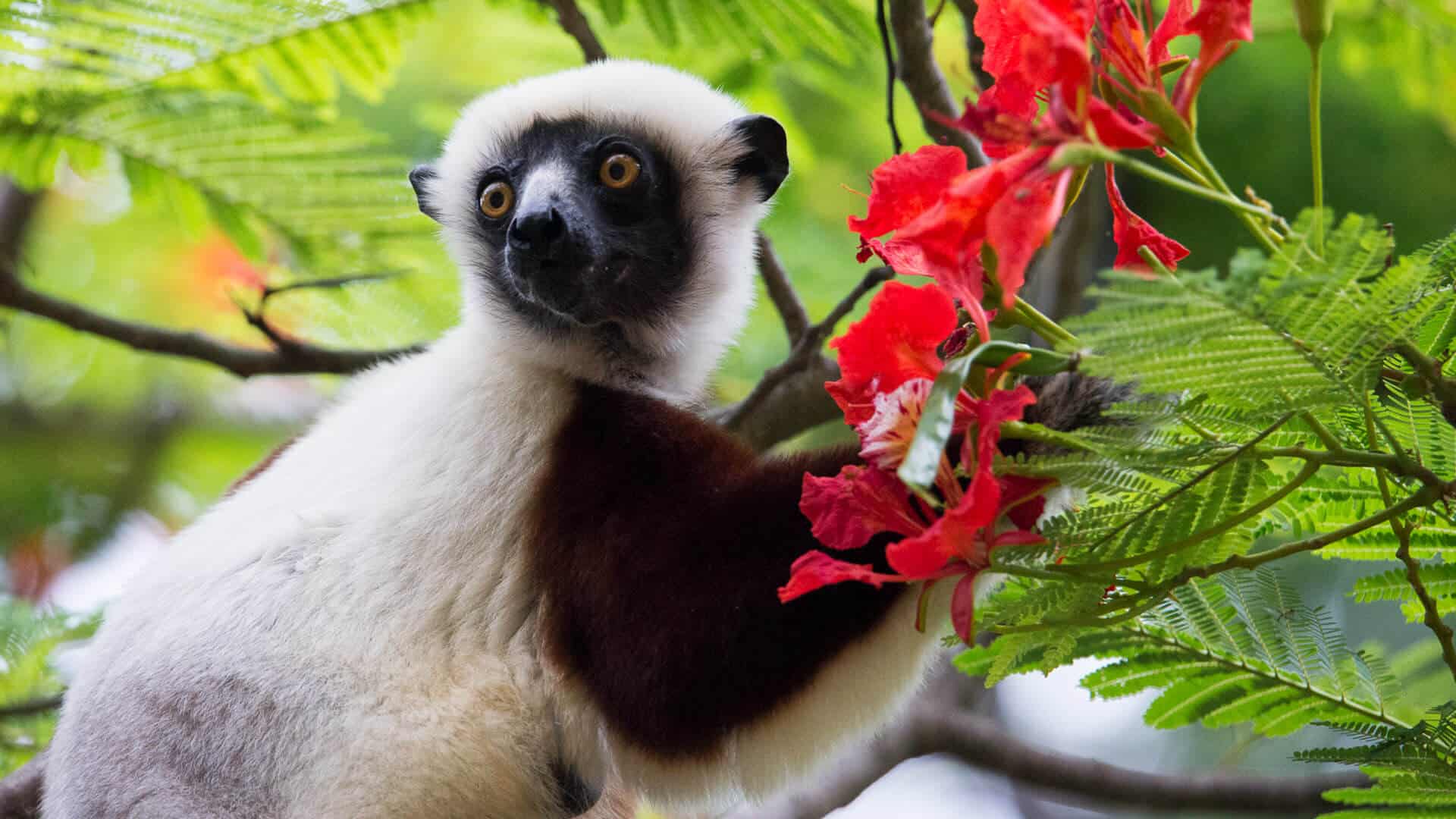
  • Coquerel’s sifaka
  • Mouse lemurs
  • Fossa
  • Bush-pigs
  • Madagascar fish eagle
  • Crested coua
  • Panther chameleon
  • Green sea turtles

Best Times to Go

The best time to visit is during the dry season, from April to November, when wildlife is active and the weather is pleasant. June to September is ideal for cooler temperatures and easier forest exploration.

Tsingy de Bemaraha National Park

Overview

Tsingy de Bemaraha National Park is one of Madagascar’s three UNESCO World Heritage Sites. The park’s dramatic limestone formations, known as tsingy, jut out like sharp blades across the landscape and are often described as a forest of limestone needles, some reaching up to 328 feet tall. Each limestone needle’s summit, slope, and base form unique ecosystems that host different species specially adapted to the challenging steep environment.

Location

Tsingy de Bemaraha National Park is located in western Madagascar, near the town of Bekopaka.

Wildlife

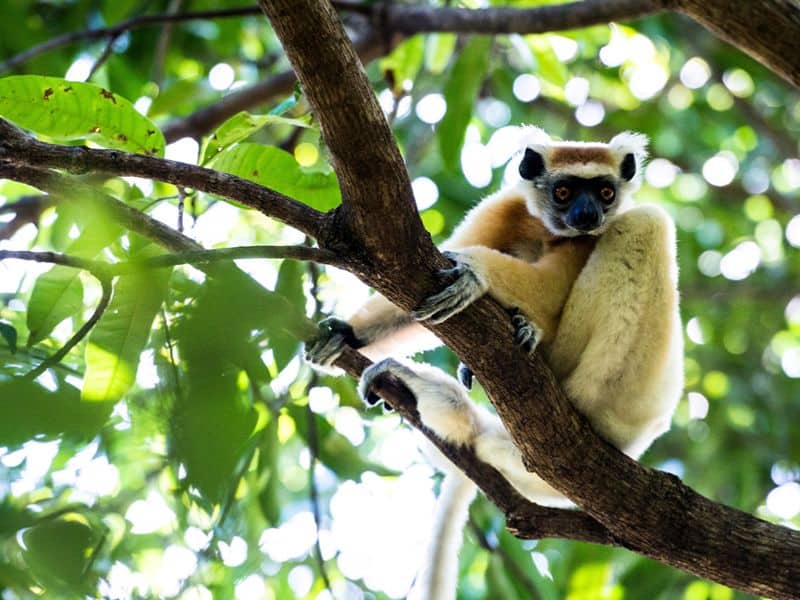
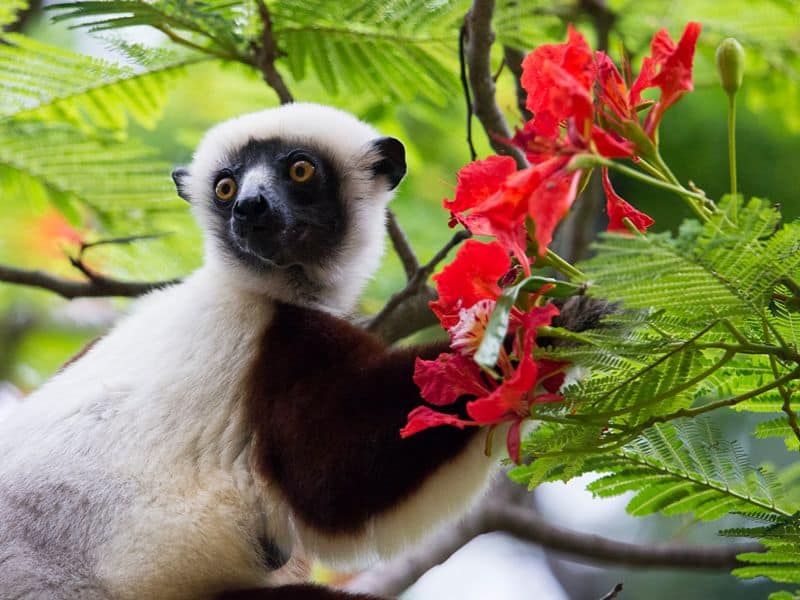
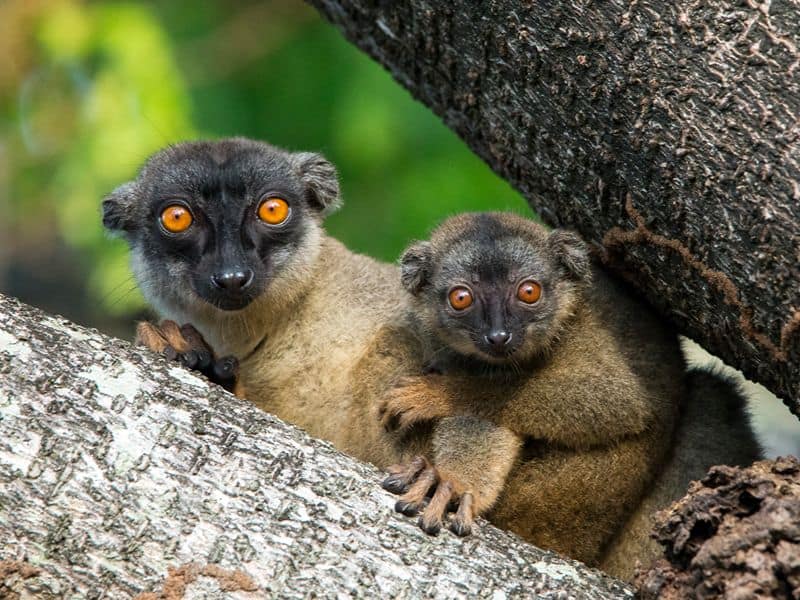
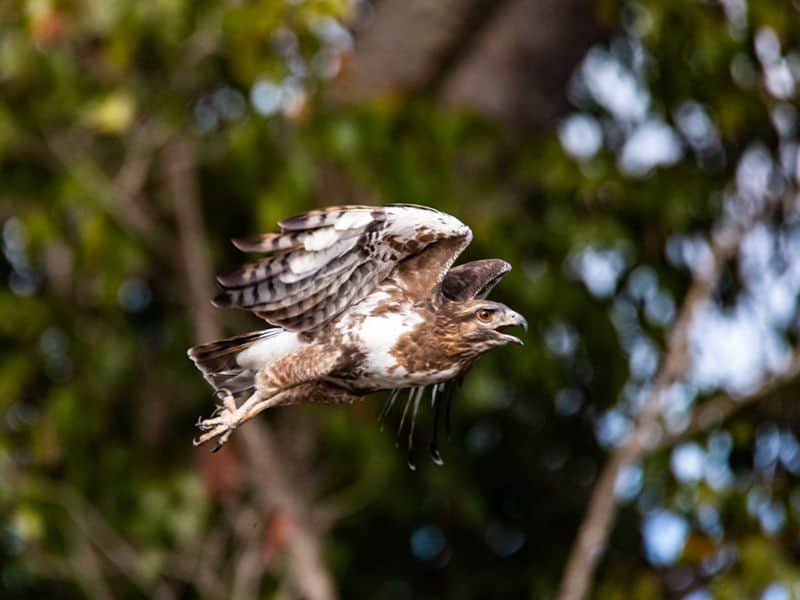
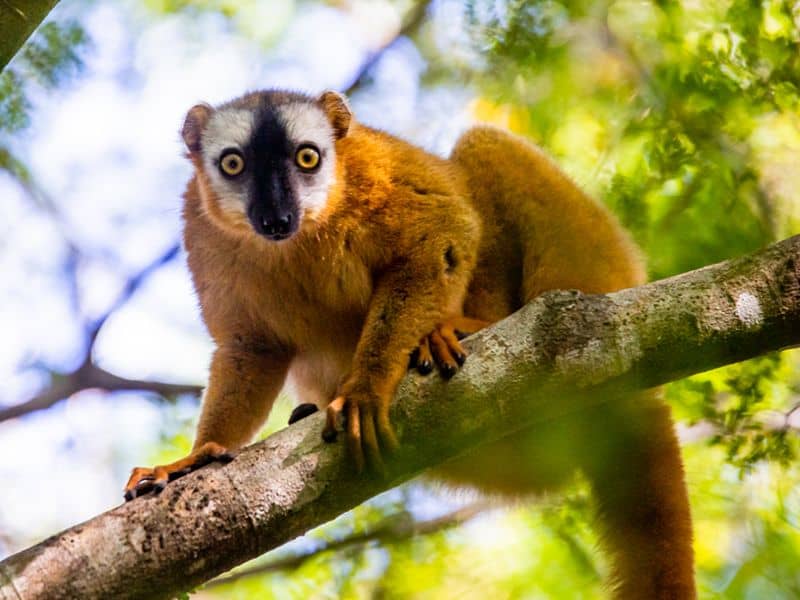
The park is home to unique wildlife such as Decken’s sifaka, red-fronted brown lemur, and the Malagasy giant rat. Bird species include the Madagascar fish eagle and crested ibis. Reptiles like leaf-tailed geckos and radiated tortoises also thrive here. You can also find the Antsingy leaf chameleon which only lives in the park.

  • Decken’s sifaka
  • Red-fronted brown lemur
  • Antsingy leaf chameleon
  • Malagasy giant rat
  • Madagascar fish eagle
  • Crested ibis
  • Leaf-tailed gecko
  • Radiated tortoise

Best Times to Go

The best time to visit is during the dry season, from April to November, when the trails are accessible and the weather is favorable for exploring the rugged terrain. The park is often closed during the rainy season due to difficult road conditions.

Avenue of the Baobabs – Morondava

Overview

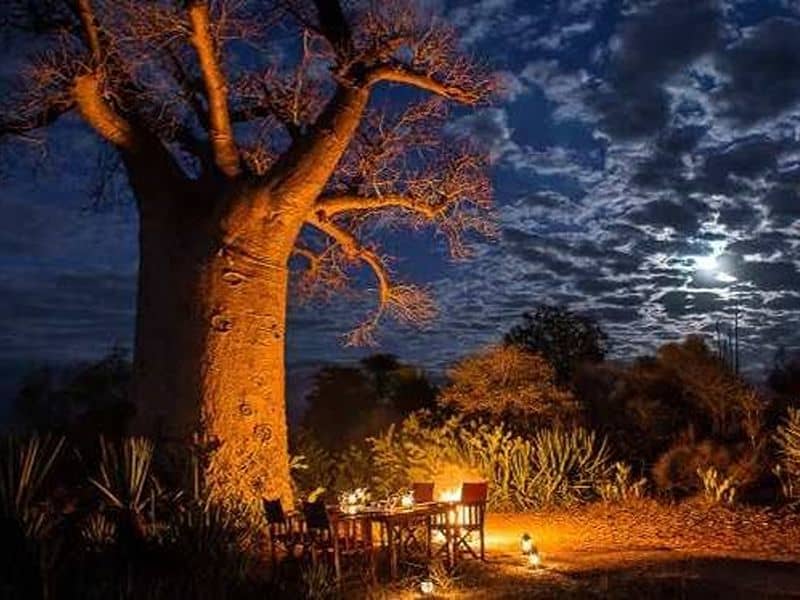
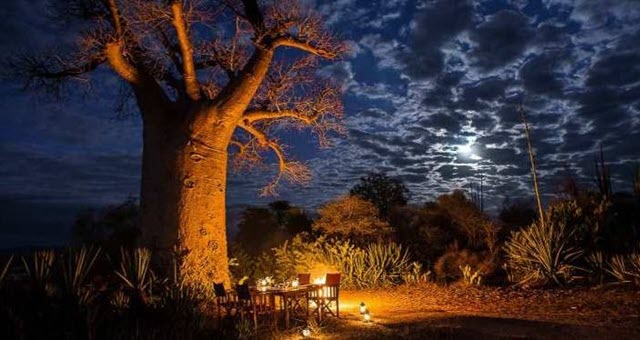
The Avenue of the Baobabs is a 850ft stretch of dirt road that goes through a grove of iconic Grandidier’s baobab. These trees are endemic to Madagascar and the road has 202-25 with 25 more in the surrounding area.

Location

The Avenue of the Baobabs is located in western Madagascar, between Morondava and Belon’i Tsiribihina. It is half an hour north of Tsingy de Bemaraha National Park.

Wildlife

While the main attraction is the striking baobab trees, with some being over 800 years old, you may also spot birds, chameleons, and other small wildlife typical of Madagascar’s dry deciduous forests.

Best Times to Go

The best time to visit is during the dry season, from May to October, when the skies are clear and the road is more accessible. Early morning or sunset offers the most dramatic lighting for photography.

Ifotaka Community Forest

Overview

The Antandroy tribal ancestors are buried in tombs within these sacred forests, which has helped protect the surrounding wildlife. Many tombs are hidden in the forest undergrowth, while gallery and spiny forests grow above, providing refuge for numerous lemur and bird species.

Location

Ifotaka Community Forest is located in southeastern Madagascar, near the town of Ifotaka in the Anosy region.

Wildlife

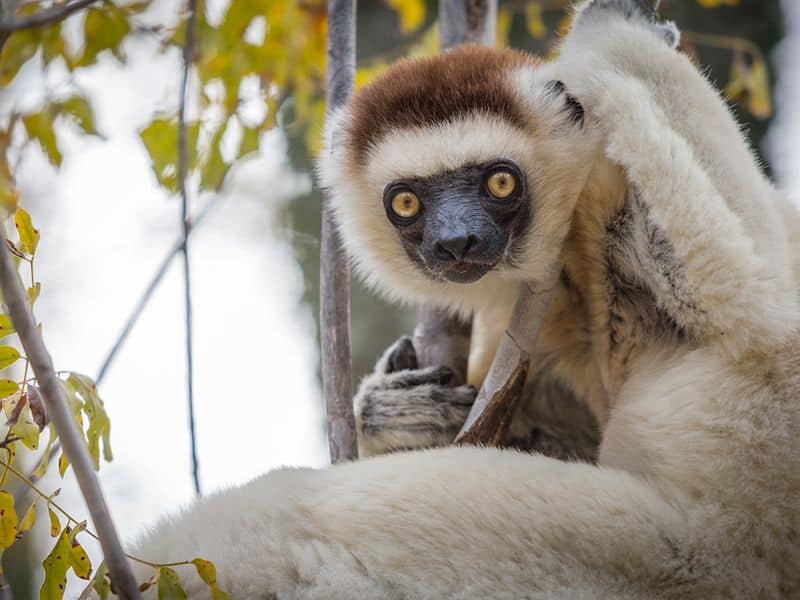
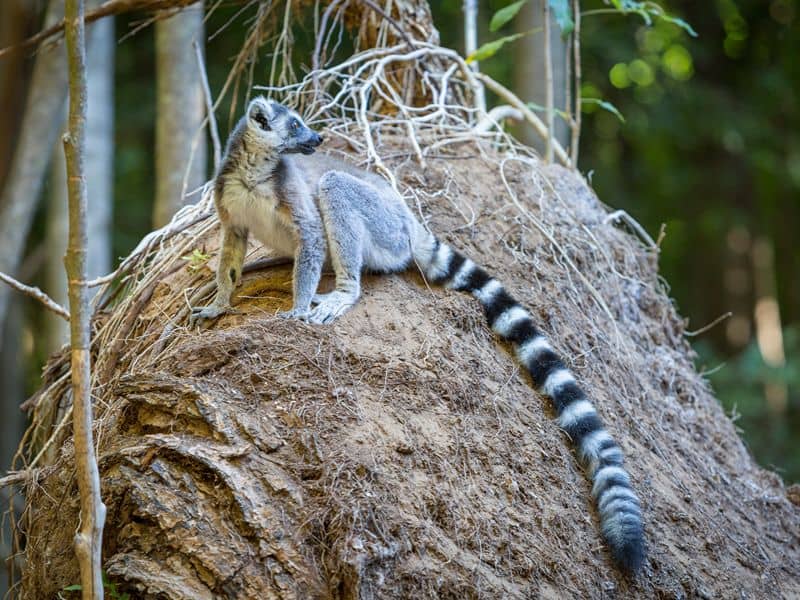
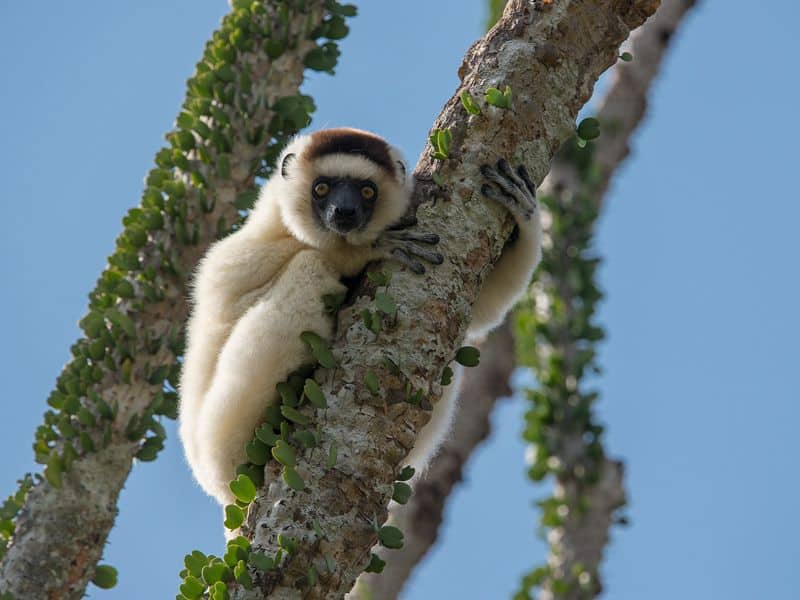
The forest is home to various lemur species, including the ring-tailed lemur and Verreaux’s sifaka. It also supports numerous bird species, reptiles such as chameleons, and endemic plants unique to the dry spiny forest ecosystem.

  • Ring-tailed lemur
  • Verreaux’s sifaka
  • Madagascar paradise flycatcher
  • Greater vasa parrot
  • Panther chameleon

Best Times to Go

The best time to visit is during the dry season, from May to October, when trails are more accessible and wildlife is easier to observe. The rainy season can make travel difficult due to muddy conditions.

Isalo National Park

Overview

Isalo National Park is renowned for its sandstone landscape, featuring rocky outcrops, plateaus, expansive plains, and canyons nearly 700 feet deep. Within this unique terrain, 13 species are found only in Isalo. Beyond its wildlife, the park’s distinctive flora includes the iconic elephant’s foot plant and various aloe species adapted to the arid, rocky environment.

Location

Isalo National Park is located in southwestern Madagascar, near the town of Ranohira.

Wildlife

Isalo National Park is home to the charismatic ring-tailed lemur and the agile Verreaux’s sifaka, both often seen navigating its sandstone canyons. The park also hosts Benson’s rock thrush, a bird unique to the area, along with reptiles like the Madagascar ground boa and panther chameleon.

  • Ring-tailed lemur
  • Verreaux’s sifaka
  • Benson’s rock thrush
  • Madagascar ground boa
  • Dumeril’s boa
  • Panther chameleon
  • Malagasy rainbow frog
  • White-lipped bright-eyed frog

Best Times to Go

Visiting between May and October offers the most enjoyable conditions, with clear skies and firm trails perfect for hiking. During this dry season, wildlife tends to gather around water sources, making animals easier to spot. The crisp weather also creates beautiful lighting for photography, especially during mornings and evenings.

Nosy Be

Overview

Nosy Be, which means “big island” in the Malagasy language, is a volcanic island off Madagascar’s northwest coast and is a great spot to see whale sharks. The island’s rich forests are home to the endemic black lemur, the world’s smallest frogs, and one of the tiniest chameleons. Its clear waters are filled with vibrant coral reefs and diverse marine life, offering unforgettable wildlife encounters both on land and underwater.

Location

Nosy Be is a tropical island off Madagascar’s northwest coast and can be accessed by plane from Tana.

Wildlife

Nosy Be is rich in both terrestrial and marine biodiversity. The island is home to the striking black lemur, which is unique to the area, along with a variety of other lemur species. Birdwatchers can spot endemic and migratory birds, including colorful vangas and kingfishers. The island’s forests shelter diverse reptiles, including one of the tiniest chameleons, as well as the world’s smallest frogs alongside day geckos. Offshore, vibrant coral reefs teem with tropical fish, sea turtles, and occasional sightings of manta rays and whale sharks.

  • Black lemur
  • Colorful vangas
  • Kingfishers
  • Tiny chameleon
  • World’s smallest frog (Stumpffia pygmaea)
  • Day geckos
  • Sea turtles
  • Manta rays
  • Whale sharks

Best Times to Go

The ideal time to visit Nosy Be is between May and October, when the weather is dry and temperatures are comfortable. This period offers calm seas perfect for snorkeling and diving. It also coincides with the whale shark season (typically September to December). Additionally, sea turtles nest on Nosy Be’s beaches mainly from November to March, making it a great time for turtle watching.

Nosy Komba

Overview

Nosy Komba is a small volcanic island located near Nosy Be, known for its lush forests and traditional fishing villages. It’s famous for its friendly black lemurs and rich marine life, including vibrant coral reefs and sea turtles. The island offers a peaceful retreat with excellent opportunities for wildlife watching, hiking, and snorkeling.

Location

Nosy Komba is a small volcanic island located just southeast of Nosy Be, off Madagascar’s northwest coast.

Wildlife

The island is famous for its friendly black lemurs, which are often easy to spot. Nosy Komba’s forests also shelter a variety of reptiles like chameleons and geckos, as well as diverse bird species. The surrounding waters boast vibrant coral reefs teeming with tropical fish, sea turtles, and other marine life.

  • Black lemur
  • Chameleons
  • Day geckos
  • Tropical reef fish
  • Sea turtles
  • Manta rays
  • Reef sharks
  • Whale sharks

Best Times to Go

The ideal time to visit Nosy Komba is between May and October, when the weather is dry and temperatures are comfortable. During this period, calm seas make snorkeling and diving especially enjoyable. While whale sharks are more commonly seen near Nosy Be from September to December, Nosy Komba’s clear waters still offer excellent marine wildlife viewing. Sea turtles also nest in the region from November to March, providing great opportunities for turtle watching.

Madagascar Photo Gallery

All photos on this page (including the gallery) are courtesy of Madagascar Collection

CONTACT US

TWS1
Scroll to Top