Home
Safari Planning>
Animals>
Destinations>
Adventures>
Groups
Safari Blog>
About/Contact>

Africa Safari Blog


Sankuyo Bush Camp Predator Viewing

Monday, 22 March 2010 18:28 by BillGiven

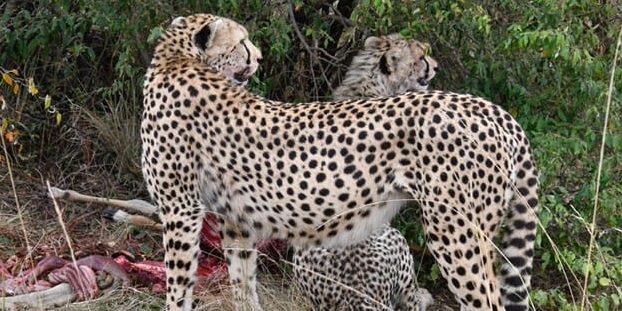
Photo of a lion Sankuyo Bush Camp Cheetah Dining on Impala
Sankuyo Bush Camp cheetah kill of impala.
© Irv Mendelssohn

Sankuyo Bush Camp has established itself quickly as a tremendous camp for year round game viewing. Between my recent visit to Sankuyo Bush Camp in late January and a number of client reports from February visits, it has moved up just behind the Kwara Concession Camps for my top green season (December through March) locations.

I have had quite a few clients go to both camps and the viewing highlights are coming out very even. Currently guests at Kwara and Little Kwara camps are experiencing brilliant cheetah viewing with a group of 6 regularly seen as well as their famed 3 brother coalition and that is keeping Kwara in my top green season spot but Sankuyo Bush Camp has had a good number of excellent cheetah sightings too and has had much better leopard sightings for our clients. Lions have been regular in both locations and wild dogs come and go in both places. My advice for the green season is to combine them both!

Sankuyo Bush Camp February Action

We had three sets of clients, all with three night stays at Sankuyo Bush Camp during February and amazingly each was present for a major predator event but each with a different predator species!

Cheetahs Active at Sankuyo Bush Camp

Photo of a lion Sankuyo Bush Camp Cheetah Dining on Impala
Sankuyo Bush Camp cheetah kill of impala.
© Irv Mendelssohn

Early in February things got off to a FAST start at Sankuyo Bush Camp when Irv and Karen from Louisiana were on hand to watch a start to finish cheetah hunt of an impala. These folks had the big cat tri-fecta with cheetah kill, about an hour with a leopard and following a male lion as day became night.

Sankuyo Bush Camp Leopard Kill

Photo of a Sankuyo Bush Camp Leopard eating an Impala in a tree
A collared leopard dines on impala near Sankuyo Bush Camp.
© Jerry Thornton

Mid-month Kim and Jerry from California were on an early morning game drive when their guide, Doctor, found fresh leopard spoor (tracks) and began tracking. They actually came to the end of a trail where the tracks stopped and doubled back to find a big male leopard panting in fatigue and he allowed them to approach to just four or five feet away as he rested. It soon became evident that he was tired from a successful hunt and must have just hauled an impala up in a tree moments before being found because he soon rejuvenated and proceeded to scale a tree to his prey which he had not yet begun to eat and they were then able to see the feeding process from the beginning.

Sankuyo Bush Camp is located very close to the Botswana Predator Conservation Trust research base making this area the center of Botswana’s predator studies. That speaks volumes to the quality and diversity of predators in the area but does mean you will occasionally find an animal wearing a research collar. Kim happens to be a very accomplished author on animal subjects, primarily domestic dogs and I was able to arrange an interview for her with one of the predator research team. Lions roaring were nightly experience and they were observed as well.

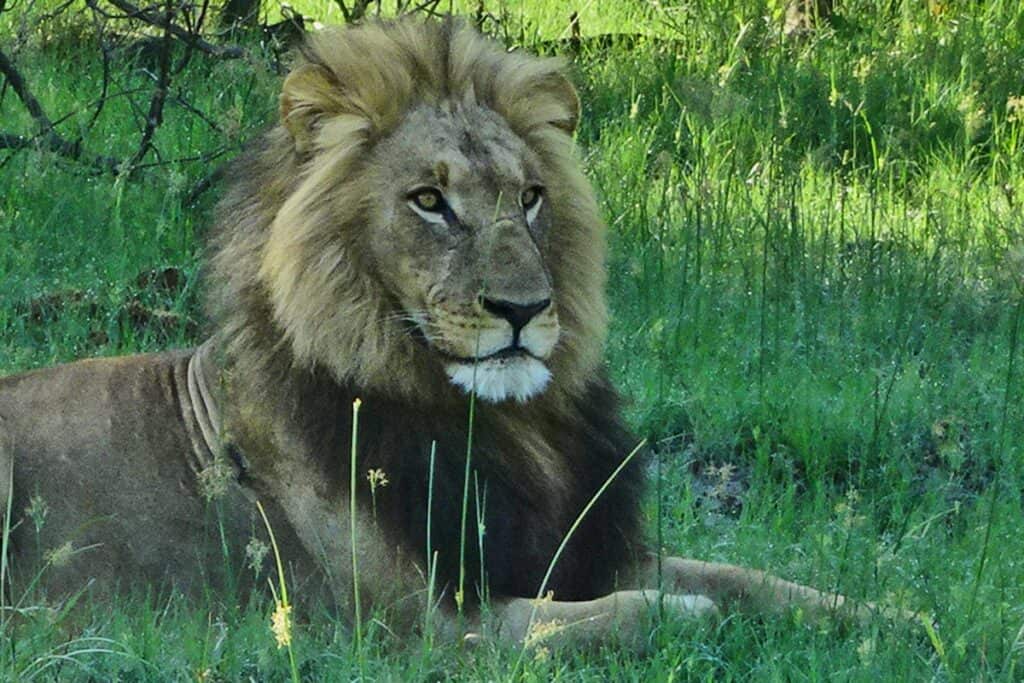
Photo of a lion at Sankuyo Bush Camp with a Giraffe
Male lion tucked under the bushes near his giraffe kill next to Sankuyo Bush Camp.
© Ken Imler

Lions at Sankuyo Bush Camp

The month ended with our client, Ken from Colorado, in Sankuyo Bush Camp when the Santawani pride of lions took down a giraffe in the night just about 100 yards outside of the camp near Tent #6. The excitement was paramount through the night and by morning the sighting was of fat lions laying up in the bushes with the large remains of a giraffe carcass sprawled out.

The Sankuyo/Santawani area has an extremely high density of giraffe, and in response to this plentiful food source the Santawani lion pride have become specialists at hunting giraffe. Lion prides often develop feeding cultures where they specialize on certain prey items, doesn’t mean they only eat that but with large difficult prey like giraffe it becomes an acquired craft to become proficient hunters of that species to the point where it is a common prey item.

A Flight Delay that Made People Pleased

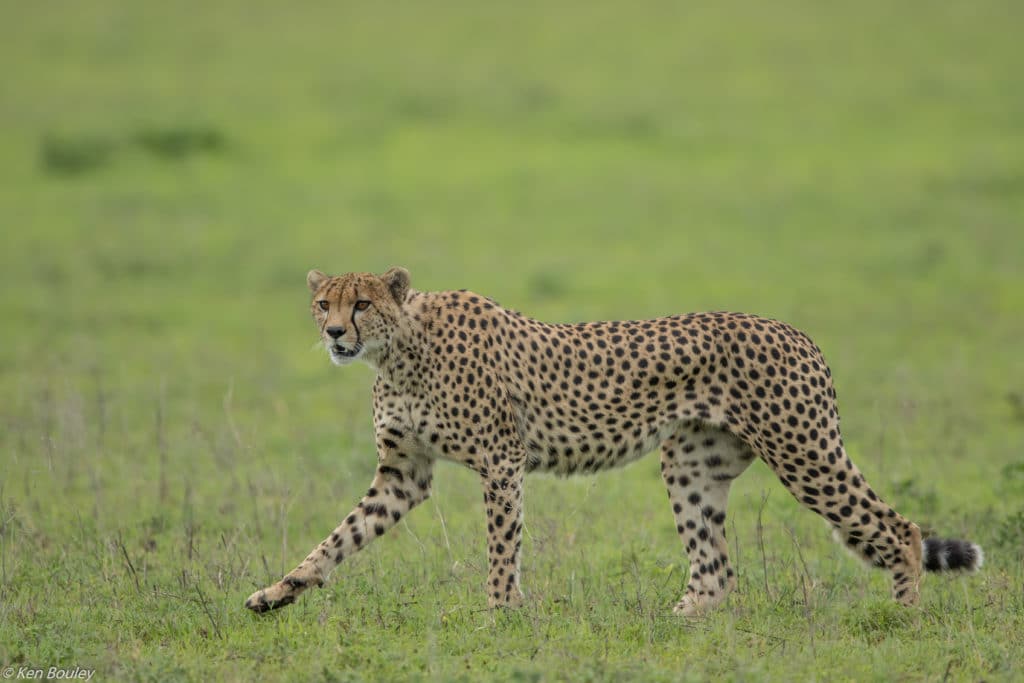
Photo of a Cheetah with a kill near Sankuyo Bush Camp
A cheetah kill is a great reason to delay a flight!
© BG

In January guests of Sankuyo Bush Camp had just boarded their Delta Air bush plane for a flight to Oddballs Enclave when an impala came streaking up the runway with a cheetah in close pursuit. Within seconds these folks witnessed a kill from their seats in the plane! What ensued next was a one hour flight delay as passengers de-planed, jumped in the game drive vehicle and watched the cheetah feast. Unfortunately I was not a passenger for this flight delay so the above photo is a recreation using a Serengeti cheetah and young wildebeest in the roles of the Botswana cast members.

Subscribe   

Bookmark and Share

Currently rated 5.0 by 1 people

  • Currently 5/5 Stars.
  • 1
  • 2
  • 3
  • 4
  • 5

Okavango Delta Flood 2010 - Impact on Botswana Safaris

Wednesday, 17 March 2010 10:38 by BillGiven

Photo of Mapula Lodge Floodwaters
High flood waters may take a toll on game viewing quality in many locations.
Photo from last September at Mapula Lodge.
© Bill Given

Arrival of Another Big Okavango Delta Flood

Last year’s annual flood into Botswana was an epic one, in the end it was one of the three largest of the last 50 years.

The early flow volume of this year’s flood indicates another large one, not likely on par with last year by sheer volume of incoming water. That said, large Okavango Delta floods in sequential years can have a magnifying impact.

Typically by September flood waters have resided quite a bit and by the time the next annual flood arrives in March/April timeframe, water levels are usually very low again. However, this year as the flood has begun to arrive there is still substantial water levels remaining from last year and the existing saturation added to the new incoming flood could result in absolute water amounts that have not been seen in half a century or more.

Mapula Lodge Flooding

Already the flood has arrived at Mapula Lodge in the far north of the Delta and also at Jacana Camp on the western side of the Delta where the floods often reach first. At Jacana the water rose a meter in just four days.

Mapula Lodge Bookings to be Re-located
It has just been announced that during the high flood period, from about April through June (will depend on actual flood conditions) it will be recommended that existing Mapula Lodge bookings be moved to other options and that no new bookings be made during that period. With high waters it will take approximately an hour of challenging driving through flooded channels to reach good game drive areas and the philosophy is if a very high quality game viewing experience is not available it is best not to offer the camp.

Photo of Mapula Lodge African Wild Dog
African wild dog puppy at Mapula in 2007.
© Bill Given

It is well known that Mapula Lodge is one of my favorite safari camps and as such one of my most highly recommended. During 2009 I felt confident that despite the high floods it would continue to be a stellar area and I sent many clients there, possibly more than any other North American safari planner and the results were fantastic.

Fortunately this year I have anticipated this flood potential and have no clients booked at Mapula Lodge between now and late July. Come late July I expect Mapula to once again be paradise and with luck there will be a triumphant re-opening with a fourth consecutive July of wild dog puppies emerging from their dens. From July into October there will be some high water and challenging driving but for those who appreciate wilderness adventure it should once again be a great choice.

How Will the Flood Impact Other Botswana Safari Camps?

Many Bostswana safari camps will be negatively impacted by the flooding. One of the reasons why I appreciate working with Mapula Lodge and their operating company, Footsteps in Africa, is because they are proactive and willing to put the quality of the client experience in front of easy profits. This was evident recently when virtually every safari operator in Botswana passed on a new 2% increase in tax to their clients while Footsteps in Africa decided to hold their prices and eat the tax increase rather than put it on clients.

Botswana Game Viewing Constantly Changing - Especially During Floods
It is critical this year to choose your camps carefully with regards to the flood impacts, it is also important to realize that there are real lasting changes in the environmental dynamics within Northern Botswana as waterways like the Savuti Channel, Selinda Spillway, and Boteti River are flowing for the first time in almost three decades. The result is animal concentrations are going to change and some areas that had phenomenal game viewing 7 years ago might decline while other areas that were average could become outstanding, others may stay about the same but it is time to observe the changing Botswana landscape and monitor to select the best locations for the future.

How to Choose a Botswana Safari Camp During Record Floods

Where to Go? Back to the Future – Savute and Santawani (Sankuyo)

While things are changing dramatically, it is not altogether unpredictable. Botswana has long been known to have long wet/dry cycles that can take decades to complete which has been most well documented with the Savuti Channel.

In October, I was there to be one of the first few people to see when the Savuti Channel crossed back into Chobe National Park (Savute area) following a 27 year absence. I felt astonished to place my hand in at the advancing end of the channel knowing something very special is occurring. As of early February, the channel has finally completed its march another 15 km or so and reconnected with the Savute Marsh. These latest water patterns (likely due to tectonic shifting as well as the flooding) indicate that things are going to return to an environment similar to 25-30 years ago.

Photo of Elephants in Savuti Channel Chobe National Park
Savuti Channel enters Chobe National Park for the first time in 28 years
© Bill Given

Twenty-five to thirty years ago safari tourism to Botswana was in its absolute infancy but those who were around know the areas that were exceptional. The legend of Savute is well known due to a number of stunning films shot there by Dereck and Beverly Joubert including The Stolen River, Patterns in the Grass, Lions of Darkness, and Eternal Enemies.

It is reported that when the Savute Marsh was fed by the channel, that about 6,000 buffalo would graze in the area right through November. The concentrations of lions and spotted hyena were dense, and the area was famed for these predators.

During parts of the year large migratory herds of zebra use the area and the wide open plains make it optimal for cheetah and wild dogs hunting newborn young. While Savute has always remained a special place, largely for its starkness and massive bull elephants, I expect Savute to return to full glory over the next couple of years.

The downside is one of the main strengths of a Botswana safari is the exclusivity of private concessions where vehicles are few and off road driving and night game drives are the standard - while Savute is in a National Park where you are on road with more vehicles and have to be in camp by dark. This is a great area for a private mobile safari and that can be a tremendous value during the high season.

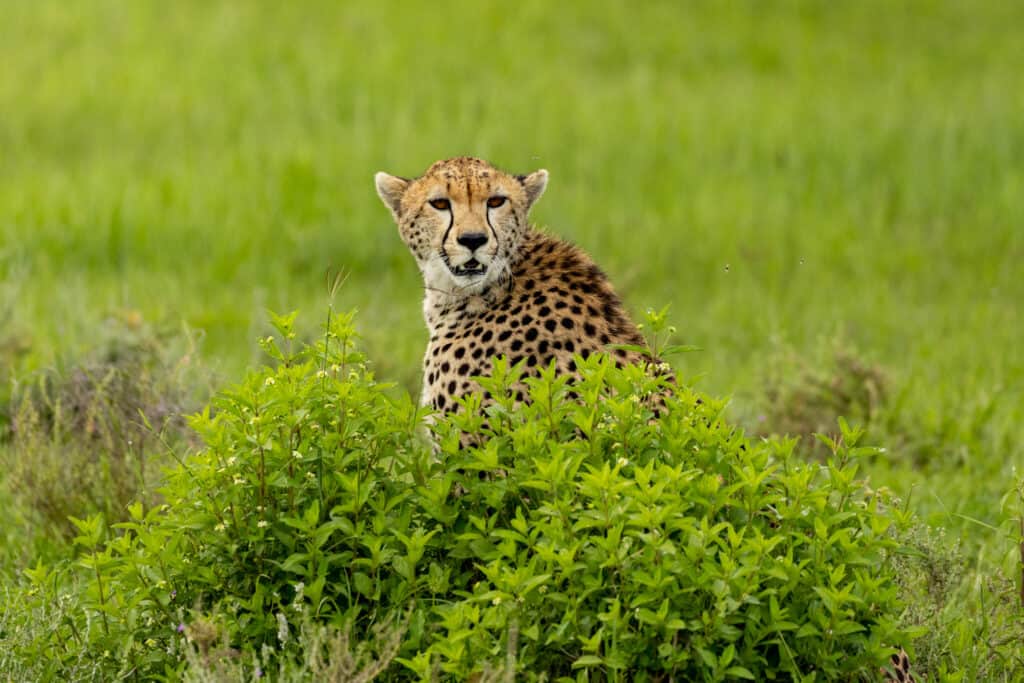
Photo of Sankuyo Bush Camp Cheetah
Cheetah have been a frequent sighting by our clients staying at Sankuyo Bush Camp in the Santawani Concession.
© Bill Given

Consider Santawani Concession During Big Flood Year

Contrary to the well known Savute, the other legendary area of twenty-five years ago is the Santawani Concession that very few people today know anything about. It is said in the 1980’s that the Santawani area had more game than the world famous Mombo had at its peak time. In fact when basically all of Northern Botswana was up for grabs for safari operations Santawani was amongst the first three or four locations selected for camps.

It’s thought that the tectonic shifts that may have closed the Savuti Channel likewise dried this area out quite a bit and the quantities of game changed with it leaving it forgotten by most. The area lies on the far east of the Okavango Delta and thus is the last area to receive any flood waters.

In the last couple of years waters have begun to push their way up the ancient channels and the wildlife is again present in very good concentrations, amongst the best I have seen anywhere in Botswana and it continues to grow. I was astounded by the quantities of animals this green season in January, and when I add the incredible sightings our clients have had throughout the green season it is ranking right up with the Kwara Concession as the most productive green season areas.

However, unlike Kwara where the floods do come in and create a rare situation where dry season viewing is not as good as the green season - the Santawani area gets better throughout the dry season as there are extensive mopane woodlands to the east that large quantities of animals return from. Santawani holds the closest permanent water to the enormous Nxai Pan and Makgadikgadi Pan areas and its believed many animals from those areas also move back into Santawani. Based on my two visits to the area, talking to other safari industry friends, and client reports I believe the Santawani Concession is already one of the top three or four game viewing areas at anytime of the year and I believe increased flooding is going to make it even better without the major logistical problems that the floods will cause in many other areas, thus this is my top pick for the foreseeable future.

Photo of Sankuyo Bush Camp Accommodations
Sankuyo Bush Camp guest tent in the Santawani Concession.
© Bill Given

The fantastic irony is while I believe the Santawani Concession is amongst the best wildlife viewing areas the accommodation choices, Sankuyo Bush Camp and Santawani Lodge, are the most affordable in any private concession in Botswana. For me Sankuyo Bush Camp is the ultimate vintage safari camp in Botswana and it has a high season published rack rate of $425 per person per night (pppn) while Santawani Lodge is a camp of simple bungalows for only $325 high season.

For comparison the best camps operated by Wilderness Safaris, Kwando Safaris, and &Beyond all have rack rates in excess of $900 pppn and the aforementioned Mombo Camp comes in at over $1,800 pppn high season. Certainly those camps are more luxurious and in cases like Mombo many safari goers have been priced out of the premier private game viewing areas. At the present time, it may well be that the premier game viewing area is going to be only for those that can do without five star accommodation. Those who are willing to embrace the wonderful luxury of dedicated game drives from a simple safari camp that still provides absolutely everything that most people will need will do just fine. The less expensive Botswana camps are more along the lines of a style that is prevalent in the Serengeti (Tanzania) and still thrills visitors there. I have already discovered that there will be some people that don’t believe you can have as good of a game experience while paying so much less but the truth is my clients who are following this recommendation are getting the best game viewing, they just sleep in a simpler tent and don’t have a pool.


Subscribe   

Bookmark and Share

Be the first to rate this post

  • Currently 0/5 Stars.
  • 1
  • 2
  • 3
  • 4
  • 5

Pioneering Cultural Tourism in Botswana

Saturday, 13 February 2010 08:17 by BillGiven

Meeting with a Village Elder in Botswana in Sankuyo Village

Today for the second time in 4 months I found myself with the group I am guiding in front of a Chief of a local tribe that had not had a tourist visit in a long time. In this case, we visited Sankuyo Village, home of the people that own Sankuyo Bush Camp (where we are staying) and Santawani Lodge, and we were the first ever tourists to visit from these camps.

Much like my visit in October with the Elders of Gudigwa Village, this was a fascinating and emotional experience that my clients were raving about. Establishing successful partnerships with local communities is absolutely essential for lasting wildlife conservation, and these visits have been consistently a high point for travelers. In the case of Sankuyo, the community runs a very large hunting concession, separate from the photo tourism concession, but the Head Man told me that when the hunting lease ends in a year that enormous area will be converted to photo tourism! This is because their community ownership model at Sankuyo Bush Camp and Santawani Lodge is working so well.

It is a shame that most safari visitors to Botswana have no interaction with local culture beyond the staff at their camps. I am elated to have pioneered visits to these local villages where visitors are most welcome and receive a remarkable interaction that is off the map and a sincere learning experience that flows in both directions.

Clients of The Wild Source have welcome access by invitation directly to me from the leaders of these communities who want the visits. These are very unique experiences and truly enhance a safari.

I am finding it somewhat ironic that my differentiation as a safari planner has been my expertise as a wildlife biologist but now my great interest and love of Botswana has led me to become the first to establish fascinating cultural visits to these local villages. I am very proud of this new involvement and happy to be able to enhance our clients safari experiences and deliver benefits to local people as well.


Get The Roar! - TheWildSource.com's monthly newsletter.

The Wild Source's Africa Video Channel - safari videos taken by The Wild Source founder Bill Given

Subscribe   

Bookmark and Share

Currently rated 5.0 by 1 people

  • Currently 5/5 Stars.
  • 1
  • 2
  • 3
  • 4
  • 5

Sankuyo Bush Camp's Innovative Bucket Shower

Thursday, 11 February 2010 10:31 by BillGiven

It is extremely unusual to find anything unique at a safari camp these days so I was quite pleased to see the innovative approach to the traditional bucket shower at Sankuyo Bush Camp.

Sankuyo Bush Camp Bucket Shower

Most clients come to love bucket showers as a simple amenity at a vintage safari camp that seems a natural part of being in the bush. The biggest issue for most people is that you need to request a staff member to come and fill the bucket and that is an inconvenience and sometimes limits when it is easy to get a shower.

Sankuyo Bush Camp has a solution to this and it is the first time I’ve seen this genius approach. At Sankuyo Bush Camp, clients can fill their own buckets anytime they want to by simply lowering the bucket and swiveling their sink faucet over the bucket (as shown above).

Solar Heating Mechanism at Sankuyo Bush Camp

Sankuyo Bush Camp Bucket Shower Heating Mechanism

Being a small eco-footprint camp hot water is provided by a solar heating system with pipes to all six tents. The set up is simple yet clever and elegant, and the end result is very enjoyable bucket showers in the open to the sky bathrooms enhancing your connection to being in the wild.

Currently rated 5.0 by 1 people

  • Currently 5/5 Stars.
  • 1
  • 2
  • 3
  • 4
  • 5

Journaling Safari Sankuyo Bush Camp Update

Sunday, 7 February 2010 12:25 by BillGiven

Bill sent this from Sankuyo Bush Camp a few days ago. He had a fairly unique lion encounter from Sankuyo Bush Camp and goes on to discuss other portions of his journey.

It is wonderful to be back in Botswana and Sankuyo Bush Camp is the perfect place to begin my latest safari. I visited this camp in September when it had just opened and much was still to be done, the camp is even better now and I can think of no camp in Botswana that delivers a better vintage experience. In the next few blog entries I will write about my experiences with the camp and the wildlife of the area.

Defanging a Lion
A Lion With a Tooth on the Outside of his Mouth

On our first game drive (I’m guiding 5 safari first timers) the animals were plentiful with many giraffe and bull elephants providing the highlights until we heard the roar of a lion. We were able to follow the roars and found a large black-maned lion, who is about 9 years old, and with a partner dominates the Sankuyo pride in the eastern portion of the concession (3 prides are seen frequently – Santawani, Sankuyo, and Gomoti prides). Completely unique is this male has one of his large canine teeth hanging outside of his mouth!

Defanging a Lion Part Two
Despite the Fang Issue, He's Doing Alright

Three months ago he was hunting zebra and ended up in the Santawani pride territory resulting in a brawl with the two Santawani males leaving him with this bizarre injury. It appears the tooth is dangling from connective gum tissue that must be quite strong since he has been eating without it falling off. In fact the lion appeared to be in very good condition.

We were able to follow this male for an hour and had excellent behavior to observe as he was smelling each large bush that he approached, then marking by rubbing his cheek glands against the bush followed by the characteristic raising of the tail and spraying urine directly behind him right at lion face level to ensure that other lions will recognize his territorial scent posts. From 15 feet away in the downwind position of one marking we were all able to make an olfactory memory of the pungent lion scent, perhaps awakening an ancient recognition when such a smell might have dictated our own course of action. We skipped our sundowner and stayed in the darkness with this magnificent lion before returning to camp with a group elated from their first ever safari game drive.

Be the first to rate this post

  • Currently 0/5 Stars.
  • 1
  • 2
  • 3
  • 4
  • 5